Decking in Cheshire, built properly
Specialist decking installers in Cheshire, from survey to final sweep
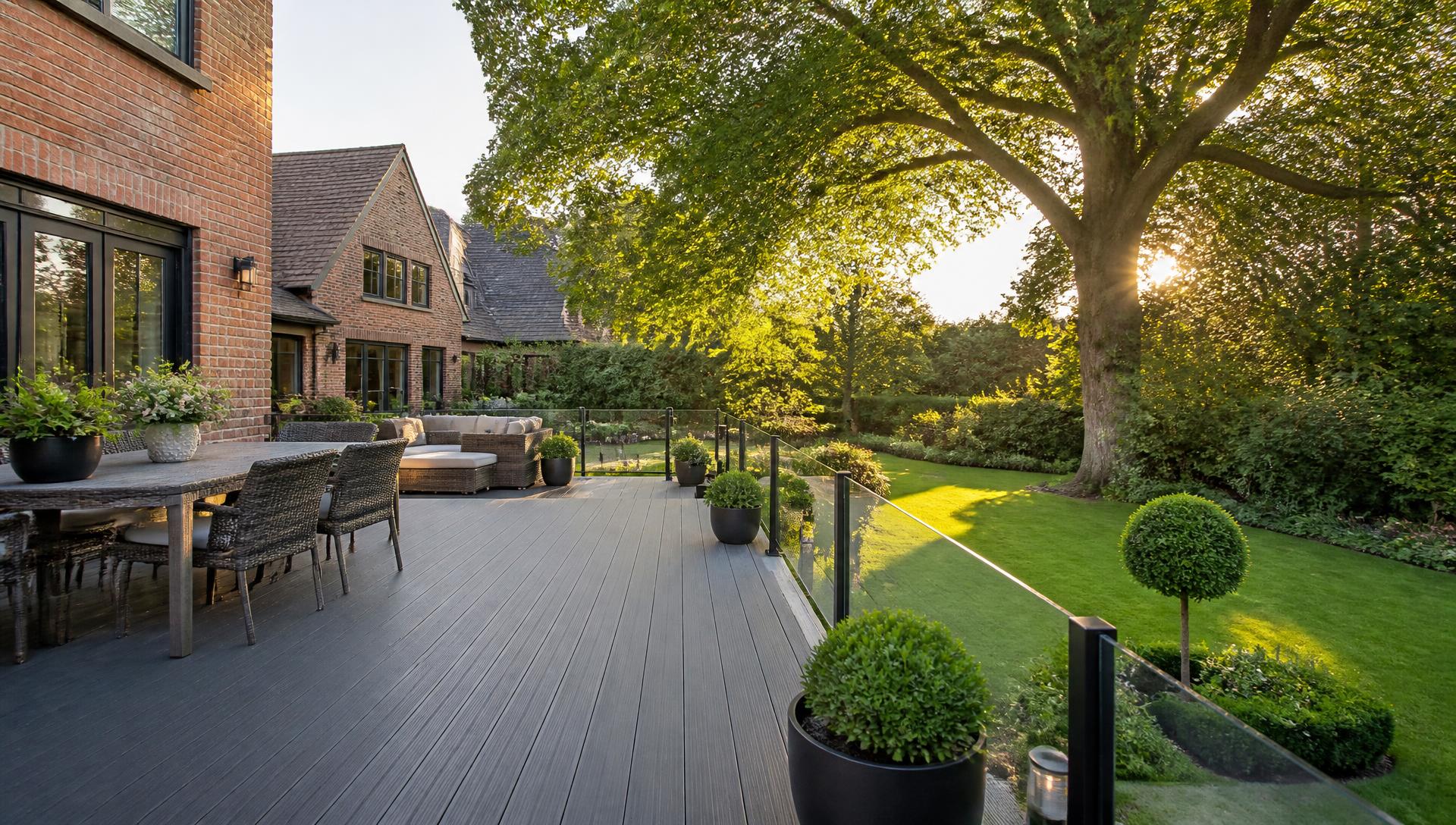
Decking Cheshire is an independent team of deck builders working across every part of the county. We design, engineer and install garden decking for homeowners in Chester, Warrington, Crewe, Macclesfield, Wilmslow, Northwich, Nantwich and all the towns and villages between them. Whether you want a low, level platform outside a set of bi-folds or a multi-level structure carved into a hillside garden, the process is the same: we survey the site properly, we design around what the ground is actually doing, and we build to a specification that will still be sound in fifteen years.
Most people searching for decking in Cheshire have had the same frustrating experience. Quotes arrive by text with a single per-metre figure and no mention of levels, drainage, joist centres or foundations — the four things that determine whether a deck lasts. We work the other way round. Our quotations set out the substructure specification in writing, itemise groundworks and waste removal, and confirm the exact board range, colour and fixing system you are paying for. If two decking firms in Cheshire quote wildly different prices, the difference is almost always hidden below the boards.
What makes a Cheshire deck last
Cheshire's ground is unusually varied for a single county. Heavy boulder clay dominates the south around Crewe and Nantwich; sandstone rises through Frodsham, Helsby and parts of Chester; the salt towns of Northwich and Winsford carry a history of ground movement; and the eastern hills at Macclesfield and Congleton bring shallow rock, steep gradients and real rainfall. A decking company that builds the same frame in all of those places is going to be wrong in most of them. Our decking fitters adjust foundation depth, pad size, post spacing and drainage strategy site by site.
Above ground, the fundamentals never change: a pressure-treated frame at 400mm joist centres, reduced to 300mm under heavy loads such as hot tubs; joist tape along every top edge so water cannot sit on the bearing surface; a fully ventilated void so the structure dries between downpours; stainless or high-grade coated fixings so nothing stains or corrodes; and consistent, deliberate board gapping for drainage and thermal movement. It is not glamorous work, but it is the difference between a deck you enjoy and a deck you replace.